Menu
From Cisplatin to the Next Discovery
An endowed professorship connects generations of MSU scientists
By Bethany Mauger |
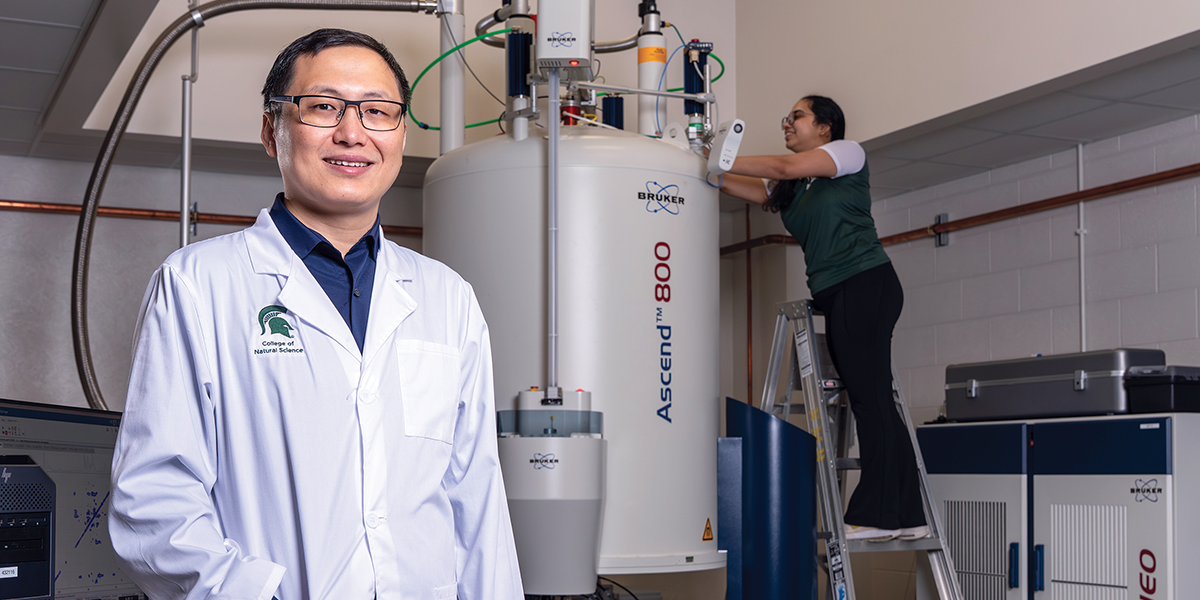
When Tuo Wang was recruited by Michigan State University, he wasn’t just joining a department. He was stepping into a scientific legacy.
Wang immediately thought of Barnett Rosenberg, the MSU researcher whose discovery of the drug cisplatin transformed cancer research and saved millions of lives.
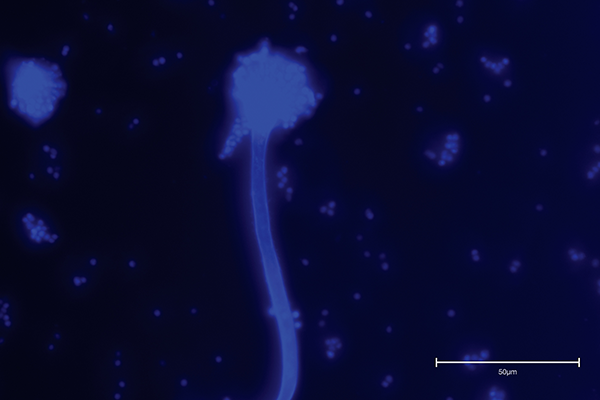
Wang, a researcher who applies sensitivity-enhanced solid-state nuclear magnetic resonance (NMR) to biomaterials, had similar aspirations. He dreamed of contributing to the field of fungal pathogens, eventually leading to better antifungal treatments that could help patients fight hard-to-treat lung infections. If Rosenberg could make a major medical breakthrough at MSU, why not Wang?
“This department has a reputation of cultivating scientific giants in this field,” Wang said. “That’s one of the reasons I came to East Lansing.”
Today, Wang holds an endowed professorship at MSU named for one of Rosenberg’s collaborators, Carl H. Brubaker, Jr. Since 2022, this professorship has allowed his team to explore other directions, including plants, algae and bacterial infections. The consistent source of funding has provided his group with a bigger toolbox than would have been possible with grants alone.
James Hoeschele, who created the professorship, was mentored by Brubaker as he pursued a Ph.D. in chemistry. He credits Brubaker with helping him find a position in Rosenberg’s lab in 1969, where he was able to contribute to ongoing cisplatin research.
Those contributions changed his life. Creating the professorship was his way of extending the opportunity that Brubaker and Rosenberg once gave him to a new generation of scientists.
I will continue to invest in this area as time goes on,” Hoeschele said. “It’s been a wonderful area of professional research for me, and I’ve continued to benefit from it. I want MSU’s science community to benefit from it too.”
The endowment has helped Wang as he devotes his time to one of the fundamental building blocks of life — carbohydrates. Scientists are still uncovering the many roles carbohydrates play in biology and chemistry.
Once upon a time, scientists thought carbohydrates were just bricks — simple units of energy storage. The other three basic types of molecules — proteins, nucleic acids and lipids — received all the attention, while the more complex functions of carbohydrates were underexplored.
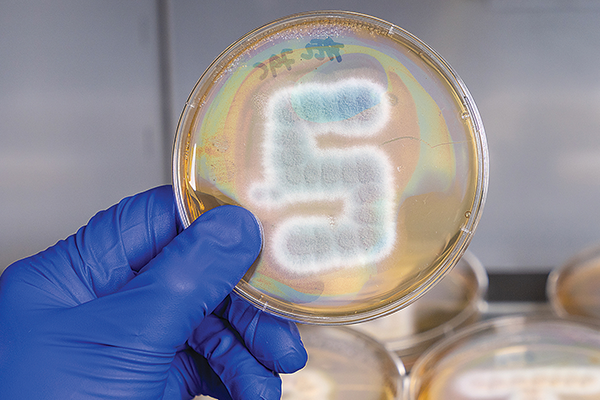
Meanwhile, carbohydrates help form cell walls, coat the surface of cells and protect them from their outside environment. Wang’s lab has explored how carbohydrates are restructured when fungi are treated with antifungal medication, and the role they play in helping fungi survive in nearly any environment.
“Scientists spent nearly four decades studying nucleic acids, work that was long regarded as fundamental science with little immediate practical application, before they played a key role in the COVID vaccine,” Wang said. “We are preparing the knowledge base needed for future challenges. We need to understand every single type of molecule in great detail.”
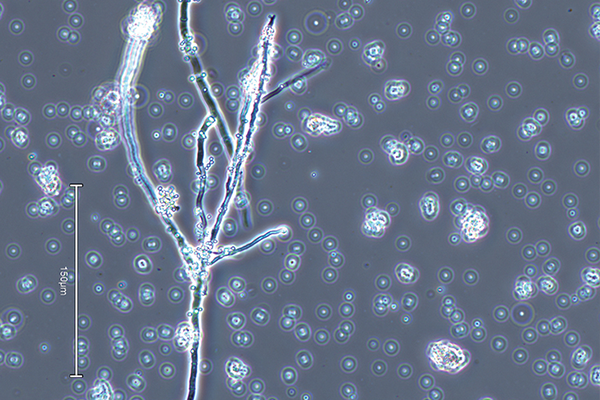
Fungal infections aren’t restricted to simple topical infections such as athlete’s foot or ringworm. Fungal spores in human lungs are difficult to remove and can lead to fatal infections. These infections are especially dangerous for people with compromised immune systems.
Many anti-fungal treatments target fungi membranes. The problem is fungi are similar to human cells, so it’s harder to find treatments that kill fungi without harming people.
But before new treatments can be developed, scientists need to better understand this fundamental class of molecules.
“That’s why I devote myself to this topic,” Wang said. “Hopefully, after a few decades, we can put our names on the scientific map.”
Just as Rosenberg’s discoveries shaped Hoeschele’s career, Hoeschele’s investment is helping Wang pursue discoveries that could change the way we approach medical treatments.