Menu
Evolution in Action
Since 1988, the world-famous Long-Term Evolution Experiment reveals how chance and adaptation intertwine
By Bethany Mauger |
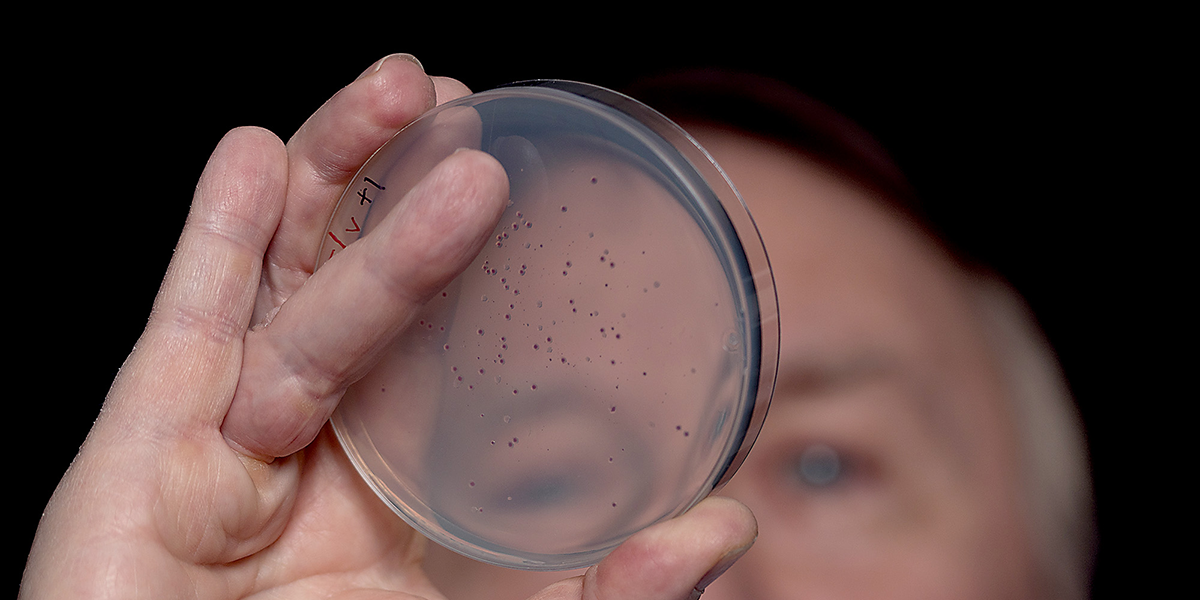
Evolution is usually too slow to observe in a human lifetime. But in a Michigan State University lab, it plays out in days, weeks, months, years and even decades.
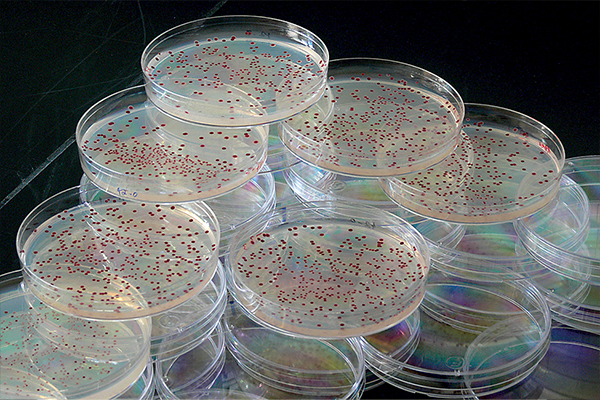
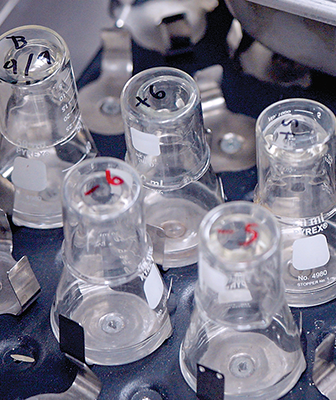
Called the Long-Term Evolution Experiment, or LTEE for short, 12 small flasks of the model organism Escherichia coli, or E. coli, offer a glimpse behind the curtain of evolution. It’s a simple system that scientists around the world have learned from as they work to understand bacterial evolution in more complex environments, from the gut microbiomes of animals and people to the lungs of patients battling cystic fibrosis. And it’s been running since the days of acid-washed jeans and hair metal rock.
Started in 1988 by MSU Hannah Distinguished Professor Richard Lenski, the LTEE has gained worldwide attention and been featured in publications from National Geographic to the New York Times for its revolutionary real-time record of evolution.
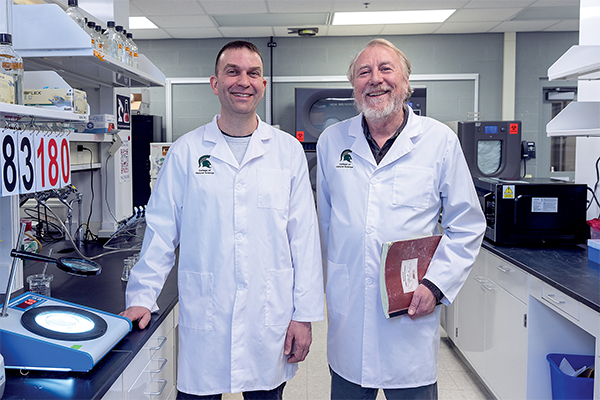
A few years ago, Lenski passed the LTEE’s reins to his former postdoctoral researcher Jeffrey Barrick, who’s now also an MSU Hannah Distinguished Professor. At nearly 40 years old, the LTEE isn’t slowing down. It has more secrets about evolution to reveal to the researchers who are patient enough to keep looking for them.
The Long-Term Evolution Experiment Timeline
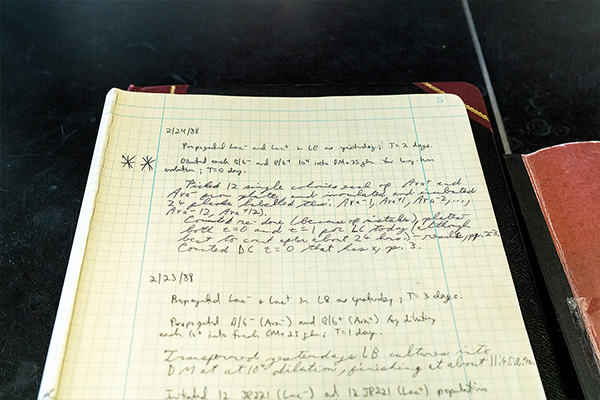
February 24, 1988: The experiment begins
It all started with 12 flasks filled with fresh glucose medium. Lenski, then a faculty member at the University of California, Irvine, started with non-pathogenic E. coli, a common model organism. Every day, he used a pipette to transfer 1% of each population to a new flask. Eventually, this project would be dubbed the Long-Term Evolution Experiment, or LTEE.
December 20, 1988: 2,000 generations
Each day, the LTEE cells double nearly seven times. By the time the experiment’s first year rolled around, more than 2,000 E. coli cell generations had passed.
December 1991: First LTEE paper published
Lenski and his team published a paper in The American Naturalist journal, reporting that all 12 populations in the experiment were increasing their competitive fitness at a fast clip.
April 1992: A new home at MSU
The LTEE was put on ice while Lenski packed up his lab and moved across the country. His destination, Michigan State University, was where his lab would flourish for decades to come.
June 1997: Hypermutators emerge
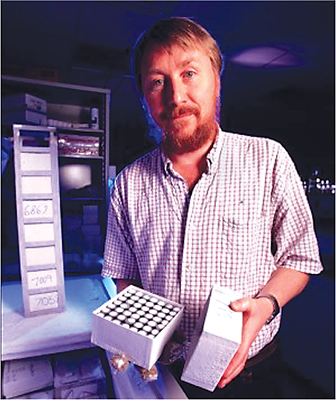
Lenski’s lab published a paper in the journal Nature revealing that several LTEE populations had evolved higher mutation rates because of changes to their DNA repair functions. These hypermutators stood a better chance of racking up even more beneficial mutations and so could evolve faster.
March 1999: The beginning of a beautiful friendship
A visit to a colleague’s lab in France led to a joint paper published in the Proceedings of the National Academy of Sciences (PNAS). A member of that lab, Dominique Schneider, played a key role in the paper and went on to be an outstanding collaborator on many subsequent LTEE projects.
January 2000: One flask, two lineages
Two genetically distinct lineages were shown to have evolved within one LTEE population, and they’ve gone on to coexist for tens of thousands of generations. This diversification was surprising since it was thought that the simple environment of the experiment would lead to competition with only one winning strain.
January 2003: A new appetite emerges
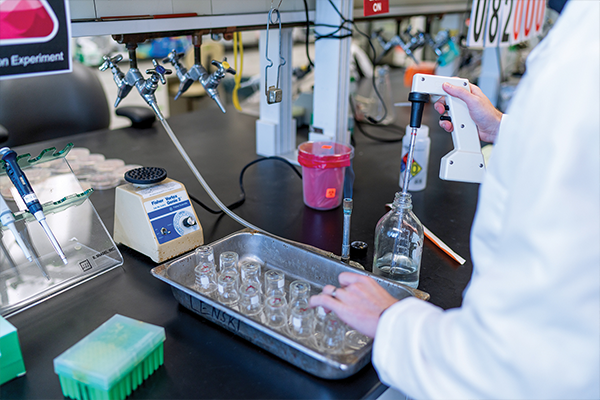
After about 31,000 generations, a lineage in one flask evolved to use citrate as a food source. The sugar glucose is the food source for the LTEE cells and citrate is only included to access iron. Graduate student Zachary Blount did years of intense work to understand how this surprising change had occurred, and the results were published five years later in PNAS.

September 1, 2006: Jeff Barrick joins the team
After completing his Ph.D. in Biochemistry at Yale, Jeff Barrick joins MSU as a postdoctoral scientist and begins his work with Lenski on the LTEE.
In 2011, Barrick joined the faculty at the University of Texas, Austin, but continued to work closely with the LTEE team.
2009: Unlocking the LTEE genomes
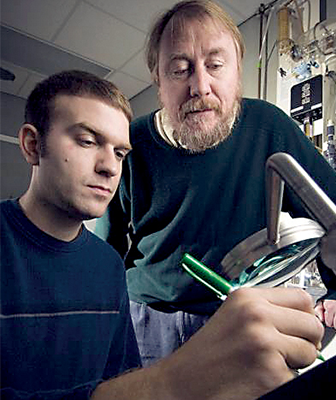
Barrick introduced a new focus to the lab — analyzing the genomes of the evolving E. coli populations. He developed a new software program called breseq, to analyze sequencing data. The team published the first analysis of whole-genome sequences from the LTEE in Nature.
February 6, 2010: A major milestone
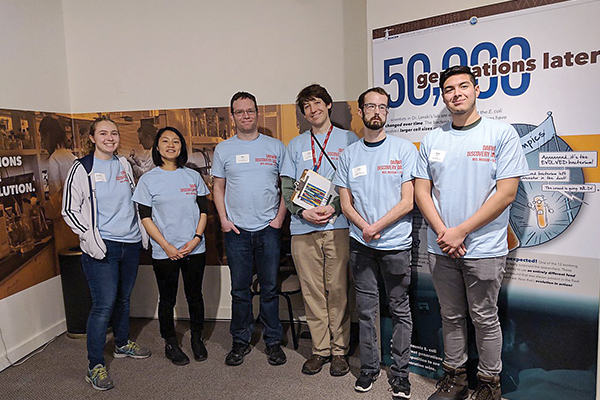
The LTEE hit 50,000 generations, with no end in sight. Genome sequencing became a growing part of the lab’s research, allowing them to track the ever-increasing mutations and their effects on the cells’ fitness and functions.
December 13, 2013: A crystal ball for LTEE fitness
Using samples collected throughout the LTEE’s first 50,000 generations, the Lenski lab measured how well the cells could grow, survive and reproduce, otherwise known as their fitness. Had the bacteria hit a limit, or was their fitness still increasing? As reported in the journal Science, a new “power law” model accurately described the LTEE bacteria’s fitness as continuing to go up from day one through 50,000 generations and onward.
August 11, 2016: Analyzing the frozen fossil record
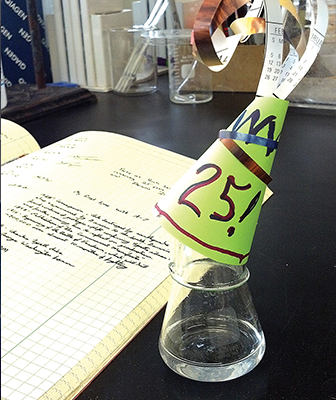
Since the beginning, Lenski’s lab has frozen samples of the LTEE every 500 generations. In 2016, the lab team published in Nature the results of sequencing and analyzing 264 of the frozen genomes, with results showing most of the common mutations were beneficial to the cells.
November 2, 2017: Drilling down into the genome
Another Nature paper took genome analysis to an even deeper level by sequencing entire LTEE populations every 500 generations through 60,000 generations. The results provided an even clearer view of how the populations changed over time. The data revealed a pattern called selective sweeps, where the bacteria evolve mutations that help them grow faster and outcompete their flask-mates without those mutations.
March 29, 2020: The experiment — and the world — shut down
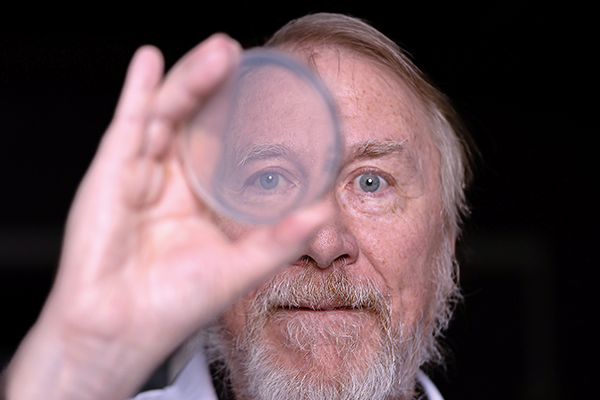
A global pandemic forced the LTEE to hit the pause button for the longest period in more than 20 years. For six months, the daily transfers of the populations were put on hold. The frozen samples meant the experiment could be restarted just where it left off when researchers received the all-clear to return to work.
June 21, 2022: On the road again
After 34 years, Lenski passed the LTEE on to Barrick’s lab at the University of Texas at Austin. At the time, Lenski thought it was goodbye for good, but time would prove him wrong.
August 2025: Stepping up
Led by Devin Lake, the Lenski lab releases a software program called STEPS, which stands for Serially Transferred Evolving Population Simulator. The program allows users—including educators as well as researchers—to run simulations of the LTEE and explore how different inputs, like the mutation rate or daily dilution factor, could change the tempo of evolution.
September 10, 2025: Homecoming
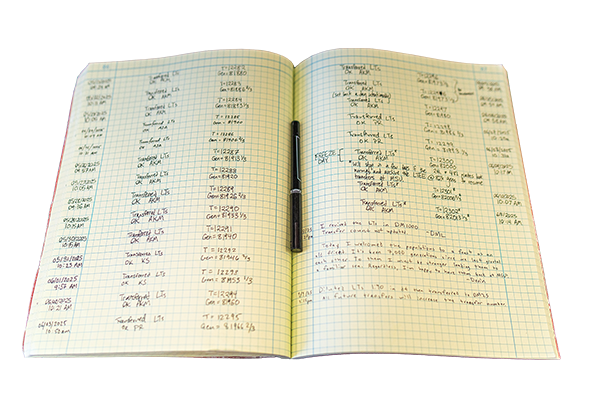
Barrick returned to MSU as a Hannah Distinguished Professor, bringing the LTEE with him. The experiment was officially restarted at MSU, with Barrick continuing to take the lead.